Several weeks ago I was watching a show where some scientists were studying layers of sedimentary rock and trying to reconstruct what things were like millions of years ago in that particular part of the world. It was pretty interesting. They were able to determine quite a bit of information by studying the types of rock in the layers, the thickness, and any fossils the layers may have contained. With that information it was possible to figure out when a certain time period ended and another began. Then over the weekend, I watched a recap of the Major League Baseball Hall of Fame induction ceremonies. When I saw the three pitchers who were honored that day, I thought back to that show that I watched on television, and I came to the realization that we may have just seen the end of an era when it comes to major league pitching.
I began playing baseball when I was seven and continued until I finished high school. And even though I couldn't hit off speed pitches consistently enough to make it to the next level, I have always remained close to the game as a fan. So I always pay particular attention when a new class is voted into the Major League Baseball Hall of Fame. This year, Pedro Martinez, John Smoltz, and Randy Johnson were selected along with Craig Biggio. Martinez, Smoltz and Johnson were arguably the three most dominant pitchers of the past 25 years. In this week's post, I wanted take a brief look at their careers and discuss the changes that we will probably see when it comes to evaluating future pitchers for the Hall of Fame. All the numbers come from the baseball reference.com website.
I began playing baseball when I was seven and continued until I finished high school. And even though I couldn't hit off speed pitches consistently enough to make it to the next level, I have always remained close to the game as a fan. So I always pay particular attention when a new class is voted into the Major League Baseball Hall of Fame. This year, Pedro Martinez, John Smoltz, and Randy Johnson were selected along with Craig Biggio. Martinez, Smoltz and Johnson were arguably the three most dominant pitchers of the past 25 years. In this week's post, I wanted take a brief look at their careers and discuss the changes that we will probably see when it comes to evaluating future pitchers for the Hall of Fame. All the numbers come from the baseball reference.com website.
| Pedro Martinez |
| John Smoltz |
| Randy Johnson |
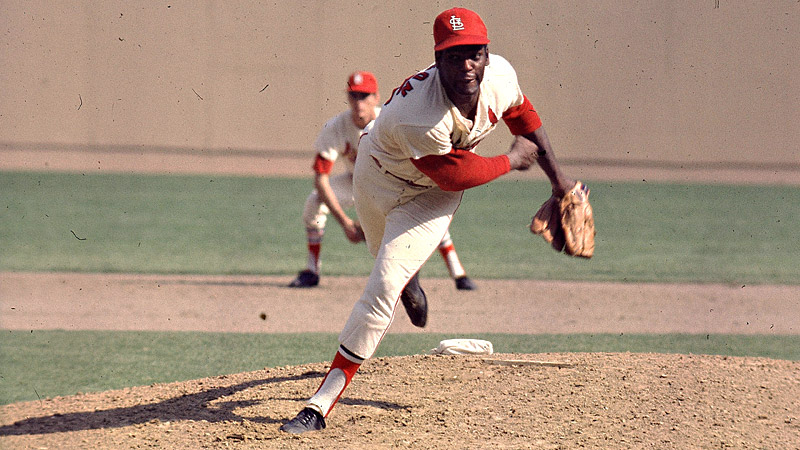
Martinez, Smoltz, and Johnson represent the last generation of pitchers making the trip to Cooperstown whose greatness can be evaluated using traditional statistics. Others who pitched during the same period may also earn induction later, but the point is that these three began their careers when baseball was starting to become more specialized, particularly when it came to pitching. When they took the mound, the goal was to throw a complete game or at the very least get to the eighth inning. If they ran out of gas, a reliever from the bullpen would come and get the last handful of outs to save the game. That is rarely the case now. And because baseball has become more specialized, it's going to change how pitchers will be evaluated for induction into Hall of Fame from this point forward. It will no longer be possible to rely as heavily on the traditional statistics to see how they stack up against previous Hall of Fame pitchers. The numbers simply won't be there. Let me show you what I mean. I will compare some key statistics from our most recent Hall of Fame inductees to two previous members and also to two of today's pitchers who are having outstanding careers so far and could be on the road to Cooperstown if they they continue to perform at their current high levels.
 |
| Bob Gibson |
| Jim Palmer |
| Clayton Kershaw |
| Zack Greinke |
The two current pitchers we will look at are Zack Greinke and Clayton Kershaw. Both have been pitching for at least eight years, and they have clearly established strong reputations as two of the premier pitchers in the major leagues today. The metrics we will compare in the following table will be the number of years played, won-loss record, innings pitched, complete games and shutouts thrown. The players are listed in chronological order by career to make it easier to pick up on the trends. Let's see what we've got:
Name
|
Year Played
|
W-L
|
Innings Pitched
|
Complete Games
|
Shutouts
|
Bob Gibson
|
17
|
251-174
|
3,884.1
|
255
|
56
|
Jim Palmer
|
19
|
268-152
|
3,948.0
|
211
|
53
|
Randy Johnson
|
22
|
303-166
|
4135.1
|
100
|
37
|
John Smoltz
|
21
|
213-155
|
3,473.0
|
53
|
16
|
Pedro Martinez
|
18
|
219-100
|
2827.1
|
46
|
17
|
Zack Greinke
|
12
|
132-92
|
2,010.1
|
14
|
4
|
Clayton Kershaw
|
8
|
106-55
|
1519.1
|
15
|
11
|
First of all, take a good look at Randy Johnson's 303 wins. It's not likely that we are going to see another career 300 win pitcher any time soon. The closest right now is Tim Hudson with 220 and he's 39 years old. Clayton Kershaw may have a shot, but he would have to average over 16 wins each year for the next 12 years to make it. That's assuming he has a 20 year pitching career. The only problem is he is only averaging a little over 13 wins each year right now, meaning he would need to perform at an even higher level in order to reach 300 wins. I'm not saying he can't do it, but the odds are not in his favor.
Now let's break down the number of innings pitched. Johnson has more innings than Jim Palmer and Bob Gibson, But he only averaged 187 innings pitched per year compared to over 200 for Palmer and Gibson. The average numbers for Martinez and Smoltz are in the 160 inning range. The same goes for Greinke. Kershaw is currently averaging about 190 innings per year. It will be interesting to see if this number holds up as his career progresses. The biggest reason for the drop in these averages is the more specialized nature of pitching. The development of the closer and set up man has effectively shortened the game for the starters. It used to be that the relief pitchers were those who didn't quite have what it took to break into or stay in the starting rotation. This was more true with the middle relievers than it was with those that closed out the game. Then there was a concerted effort to develop the "set-up man"; a pitcher who could take the ball in the 7th inning and get his team to the 9th before handing the ball to the closer. So instead of being asked to go the distance, today's starting pitchers only need to make it to the 7th inning before turning the game over to the bullpen. This definitely impacts the number of innings pitched over a career, and potentially affects the pitcher's won-loss record, depending on how good the relievers are at closing out the game. An argument can be made that this will help extend a pitcher's career. It's a fair point, but until more data is available, I don't know that we can make that assertion right now. We'd have to wait until this generation of pitcher's retires before drawing any meaningful conclusions.
From there, what we have is a cascading effect. Less innings pitched leads to less complete games. The numbers bear this out. Johnson had 100 complete games, which was less than half of the total for Gibson and Palmer who both had over 200. Then there is a significant drop to Smoltz and Martinez who sit at 53 and 46 respectively. Now take a look at Greinke and Kershaw. They are currently have 14 and 15 complete games respectively. That's less than two per season compared to the double digit complete games Gibson and Palmer averaged each year for their careers. As a result, the number of shutouts are also shrinking. Eight years into his career, Clayton Kershaw has a total of 11 shutouts. Gibson had 23 durng his first eight years. Then he threw a mind-blowing 13 shutouts in 1968. Palmer was right there with him. He had tossed 24 shutouts in his first eight years and then rang up 10 alone in 1975. Moving forward, pitchers will be throwing far fewer shutouts because many of them are limited by pitch counts. The only time managers are inclined to leave them in longer is if they have a no-hitter or perfect game going. Even if they lose the no-hitter, they are given the chance to finish the game if they still have good stuff. That explains Kershaw's 11 shutouts in only 15 complete games.
Based on today's trends, pitchers will not be able to post the same kinds of numbers as the ones who came before them. In fact, we start to see that drop off when Martinez, Smoltz, and Johnson were pitching from the early 1990s until they retired in 2009. The game just isn't the same. That's why I referred to them earlier as the last of their kind in the modern era. Up until now, statistics like won- loss record, innings pitched, ERA, complete games and shutouts, were what the baseball world used to determine a pitcher's greatness. But now the only one that has any significant weight is the ERA. Total strikeouts are impacted by the starters coming out the game earlier. The pitcher's record is something he has less control over for the same reason. The outcome is totally in the hands of the relievers. And let's face it, there are plenty of them out there who have trouble hanging onto a lead.
Starting now, the baseball writers will have to look more closely at the current analytics to figure out where today's pitchers stand. Using the old methods described above, Greinke and Kershaw would not likely achieve Hall of Fame numbers even when you project them out over an 18-20 year career. Never mind the 300 wins; 250 might be a stretch for either one of them. And forget about innings pitched, complete games and shutouts. They wouldn't come anywhere near those numbers posted by Gibson, Palmer and Johnson. So instead of the traditional statistics, the focus will be more on today's analytics like wins above replacement (WAR), walks plus hits per innings pitched (WHIP), and defense independent pitching statistics (DIPS). Believe me, those three numbers are just the tip of the iceberg. When I began looking into all the different metrics that are used to evaluate pitchers, there were so many acronyms, it would have made any government agency proud. And whatever you do, please don't ask me how to figure some of them out. The DIPS calculation alone requires 14 separate steps, and you need seven different pieces of information before you can even get started. Who would have thought that things would have gotten so complex?
As a fan, I need to get a lot smarter on these new analytics so I can carry on an intelligent conversation whenever it turns to potential Hall of Fame pitchers. That's what I think makes the induction of Martinez, Smoltz, and Johnson so significant. It marks the end of one period and the beginning of another. Within the modern baseball era, there is the traditional period, which corresponds to the application of pitching statistics like won-loss record, total strikeouts, ERA, innings pitched, complete games and shutouts to assess Hall of Fame status. The induction of Martinez, Smoltz and Johnson marks a transition from the traditional period to the sabermetric period, which uses statistics that some say require an advanced degree in mathematics to even understand. For every pitcher who has entered the league since 2000, sabermetrics will likely be the standard that will be used to decide whether or not they are worthy of the Hall of Fame.
Fifty years from now, it's not going to be hard for baseball historians to look back at past decades (the metaphoric layers of sedimentary rock) and identify the specific point in time when the transition to sabermetrics occurred. That would be with the induction of Pedro Martinez, John Smoltz, and Randy Johnson into Cooperstown in 2015; three pitchers who each dominated opposing batters in their own way. Today's pitchers like Greinke and Kershaw will do the same. It's just that now we all need to adjust to a new way of measuring that greatness to truly appreciate their accomplishments.
Until next time . . .
Karl
Based on today's trends, pitchers will not be able to post the same kinds of numbers as the ones who came before them. In fact, we start to see that drop off when Martinez, Smoltz, and Johnson were pitching from the early 1990s until they retired in 2009. The game just isn't the same. That's why I referred to them earlier as the last of their kind in the modern era. Up until now, statistics like won- loss record, innings pitched, ERA, complete games and shutouts, were what the baseball world used to determine a pitcher's greatness. But now the only one that has any significant weight is the ERA. Total strikeouts are impacted by the starters coming out the game earlier. The pitcher's record is something he has less control over for the same reason. The outcome is totally in the hands of the relievers. And let's face it, there are plenty of them out there who have trouble hanging onto a lead.
Starting now, the baseball writers will have to look more closely at the current analytics to figure out where today's pitchers stand. Using the old methods described above, Greinke and Kershaw would not likely achieve Hall of Fame numbers even when you project them out over an 18-20 year career. Never mind the 300 wins; 250 might be a stretch for either one of them. And forget about innings pitched, complete games and shutouts. They wouldn't come anywhere near those numbers posted by Gibson, Palmer and Johnson. So instead of the traditional statistics, the focus will be more on today's analytics like wins above replacement (WAR), walks plus hits per innings pitched (WHIP), and defense independent pitching statistics (DIPS). Believe me, those three numbers are just the tip of the iceberg. When I began looking into all the different metrics that are used to evaluate pitchers, there were so many acronyms, it would have made any government agency proud. And whatever you do, please don't ask me how to figure some of them out. The DIPS calculation alone requires 14 separate steps, and you need seven different pieces of information before you can even get started. Who would have thought that things would have gotten so complex?
As a fan, I need to get a lot smarter on these new analytics so I can carry on an intelligent conversation whenever it turns to potential Hall of Fame pitchers. That's what I think makes the induction of Martinez, Smoltz, and Johnson so significant. It marks the end of one period and the beginning of another. Within the modern baseball era, there is the traditional period, which corresponds to the application of pitching statistics like won-loss record, total strikeouts, ERA, innings pitched, complete games and shutouts to assess Hall of Fame status. The induction of Martinez, Smoltz and Johnson marks a transition from the traditional period to the sabermetric period, which uses statistics that some say require an advanced degree in mathematics to even understand. For every pitcher who has entered the league since 2000, sabermetrics will likely be the standard that will be used to decide whether or not they are worthy of the Hall of Fame.
Fifty years from now, it's not going to be hard for baseball historians to look back at past decades (the metaphoric layers of sedimentary rock) and identify the specific point in time when the transition to sabermetrics occurred. That would be with the induction of Pedro Martinez, John Smoltz, and Randy Johnson into Cooperstown in 2015; three pitchers who each dominated opposing batters in their own way. Today's pitchers like Greinke and Kershaw will do the same. It's just that now we all need to adjust to a new way of measuring that greatness to truly appreciate their accomplishments.
Until next time . . .
Karl
